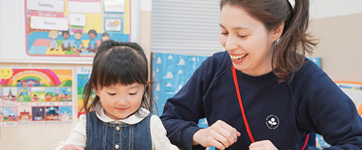
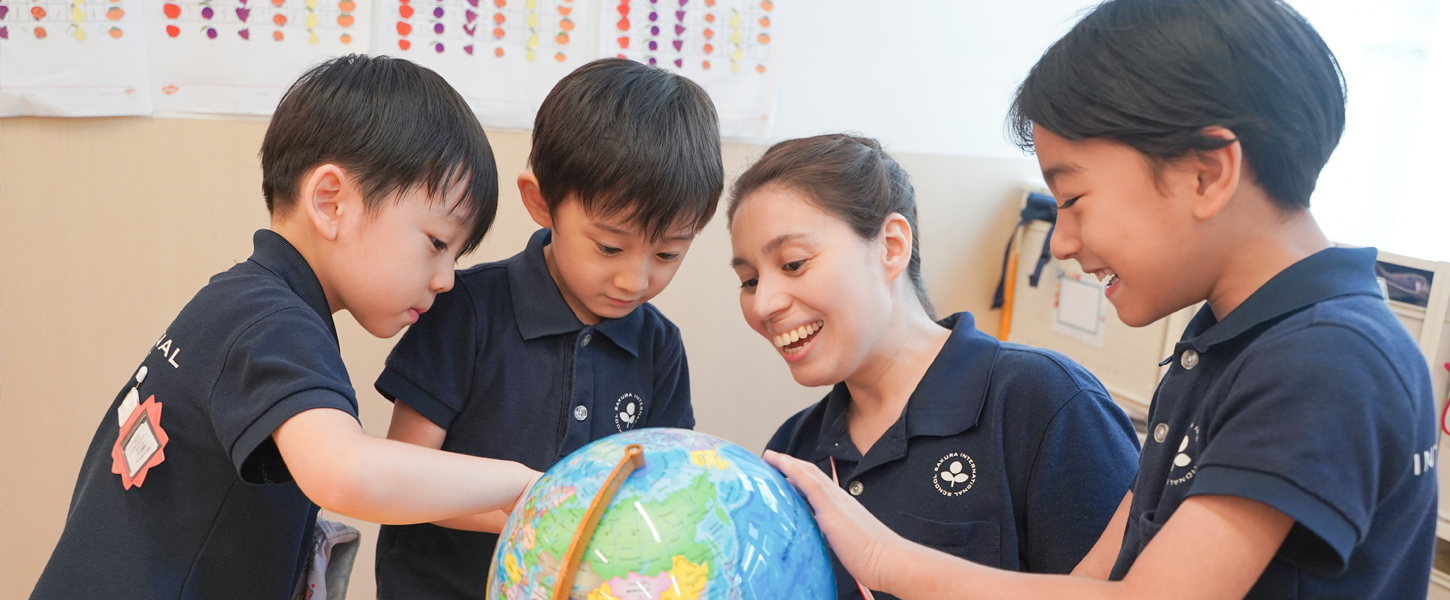
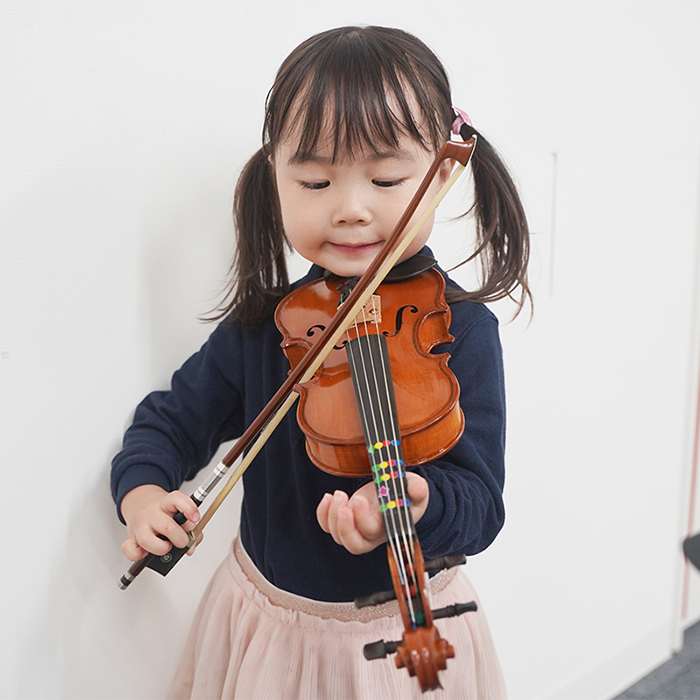
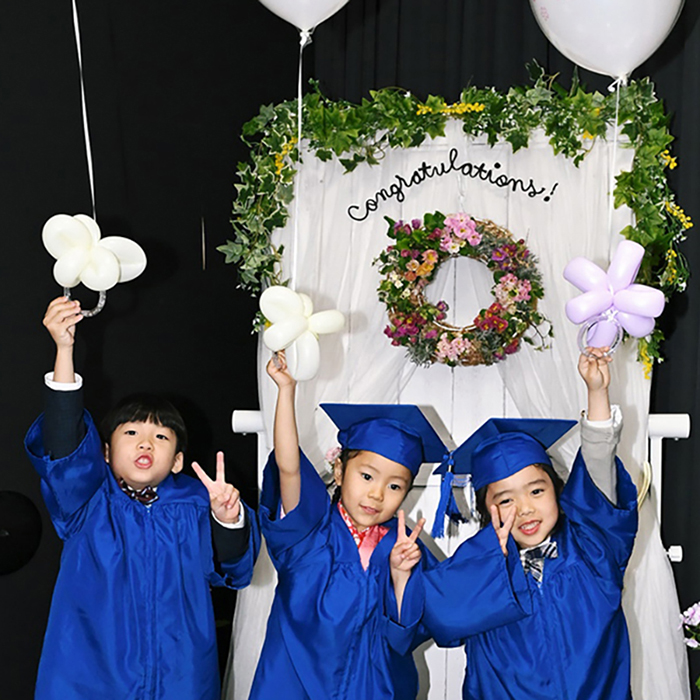
Our Kindergarten Program, available to children aged 3 to 6, is a bilingual, developmentally appropriate and child-centered learning program with an emphasis on active learning through play and guided inquiry.
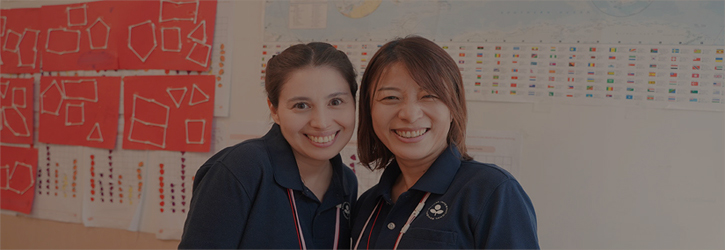
We are committed to providing students in the Kindergarten Program with choice, voice and ownership in their learning in a safe, nurturing and supportive environment. Our small class size (each class has two homeroom teachers with a about 20 students) ensures that learning is personalized to meet the needs, strengths, and interests of each child.
The Kindergarten curriculum is based on the English Early Years Foundation Stage (EYFS) and the International Baccalaureate Primary Years Program (PYP), and is designed to foster the skills, knowledge and dispositions that will support our students throughout their time at school and beyond, as they become lifelong learners.
Course
Age
K1:Born between April 2, 2021 and April 1, 2022 K2:Born between April 2, 2020 and April 1, 2021 K3:Born between April 2, 2019 and April 1, 2020
Time
8:00〜18:00 (Class hours: 9:00 AM – 2:30 PM) *Childcare is available from 7:30 AM to 7:00 PM at the latest.
Frequency
5 times a week
Learning and Development
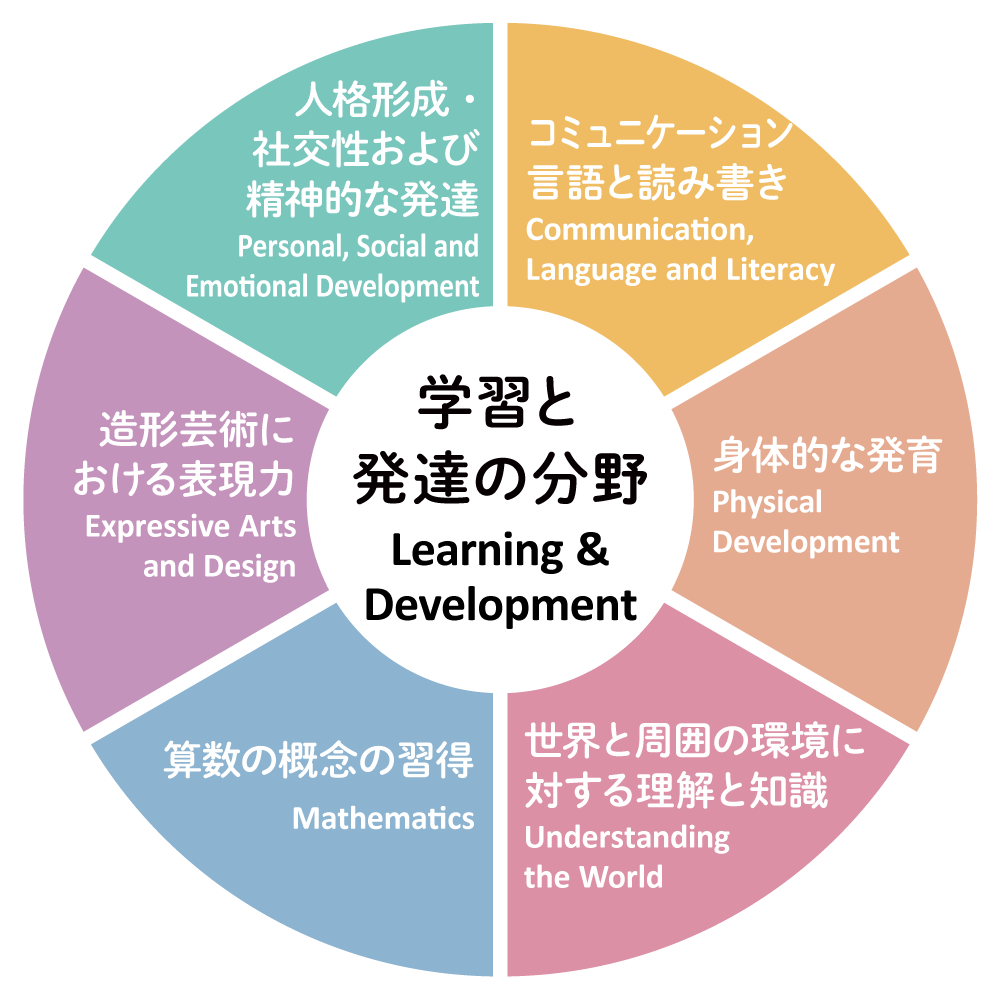
The Kindergarten Curriculum is divided into six Areas of Learning and Development:
Communication, Language and Literacy
Expressive Arts and Design
Personal, Social and Emotional Development
Understanding the World
Mathematics
Physical Development
Unit of Inquiry
Young children are natural inquirers. Asking questions is one of the ways in which children make sense of the world and their place in it. The Kindergarten Program uses this natural inquisitiveness as a basis for learning throughout the day.
This approach to learning is embedded in our Units of Inquiry in which children explore a big idea or meaningful concept through guided inquiry over a period 7–12 weeks.
Japanese
The Importance of Japanese as a Mother Tongue
Although our Kindergarten students come from a variety of language and cultural backgrounds, most of our students speak Japanese as a first language. We recognize the importance of promoting the development of the first language in emergent bilingual children—important in it’s own right and also as a foundation for second language acquisition.
Furthermore, when children are learning Japanese at school, they are also learning about Japanese culture, traditions and history.
Unit of Inquiry
Children will explore a single theme in both English and Japanese classes through Units of Inquiry. Connecting what the children are learning in both languages helps to strengthen their understanding of new concepts.
Japanese language classes
In Japanese language classes, children communicate with each other and their teachers in Japanese. Students engage in a variety of learning experiences, including shared reading, nursery rhymes, and children’s songs. In addition, children experience traditional Japanese cultural events such as Setsubun and Tanabata, play traditional children’s games, and make crafts related to the seasons.
Children also work on reading and writing Japanese characters (hiragana, katakana, and simple kanji). Additionally, students write picture diaries and letters to classmates and family.
Children will also learn mathematical concepts and skills that they are learning in English classes.
Areas Your Child Can Improve in Japanese Language Classes
Improve creativity and thinking skills through bilingual learning.
Stimulate and develop the brain.
Self-expression and listening comprehension.
Broaden your child’s interests and their ability to think from different perspectives.
Learn about Japanese culture through events, stories, songs and crafts.
Learn how to speak Japanese politely and follow Japanese social etiquette and manners.
Develop strong study habits by learning at school and home.
Learn basic mathematical concepts by using manipulatives in both English and Japanese.
Gain a deeper understanding of topics in math by studying in both English and Japanese.